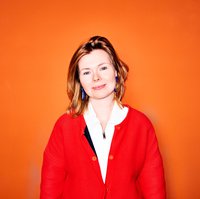
What happens within a family, across generations, when a trauma is left unspoken? Martha Bijlsma, cellist and 2026 Fellow, discusses the creative process behind her new project, Don’t Mention the War, in an interview. The interdisciplinary concert will have its premiere at the Beethovenfest.
Martha Bijlsma: Don’t Mention the War
Beyond the silence
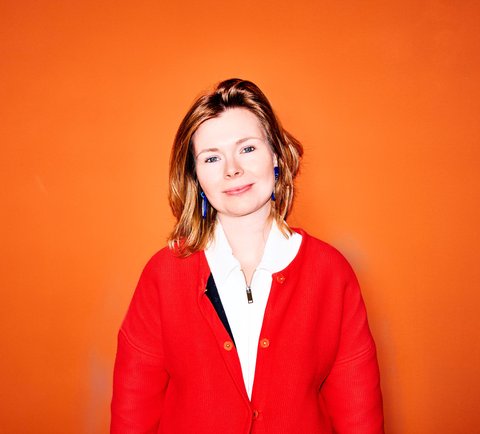
You’ve delved deeply into your family history for this project. How did that come about?
Growing up, I knew very little about my grandparents’ past. We visited them regularly, but like so many Holocaust survivors, my grandmother never spoke about the war. As a result, my father rarely spoke about it either, and as we had hardly any contact with the rest of the family, this story remained largely untold.
Over the years, I’d picked up bits and pieces here and there from casual remarks and conversations with my mother, but it still felt very distant. Even after I discovered that the family had put together a book about our history, and had read it, the story somehow didn’t feel like my own.
It was only by linking my own memories with conversations with relatives – some of whom I’d never met before – and by actively seeking out information that this story became personal to me. I began to understand not only the facts, but also the emotional reality behind them. It seemed entirely natural to me to weave this journey into a concert, because music has the unique ability to tell stories where words are no longer enough, or perhaps no longer appropriate.
What role did the silence surrounding the war play in your family?
For my grandmother, it was probably the silence that enabled her to carry on with her life after the war. Yet this silence undoubtedly had an effect on her children as well.
My grandmother survived along with three sisters and a brother. The trauma they carried with them inevitably affected the next generation, even though it was rarely spoken of. My father, my uncle and my aunt each experienced this legacy differently, and each of them has their own perspective on the extent to which it has shaped their lives. Yet, in one way or another, the silence itself became part of our family history.
How did you approach the subject? What were your first steps, and where did the process take you in terms of content?
I embarked on a personal quest rather than conducting academic research. I recorded conversations with second- and third-generation family members and learnt an enormous amount from a detailed interview that my grandmother’s brother had given to the Shoah Foundation, which I was allowed to view and use excerpts from.
I also travelled to several concentration camps where my grandmother and her family had been imprisoned, and filmed my own impressions there. At the same time, I read about the Philips Group and about intergenerational trauma.
The conversations themselves shaped the entire creative process. They influenced the themes, the music and, ultimately, the way in which I processed all the material. The significance of the radio emerged quite naturally, as did questions surrounding Jewish identity. I hadn’t anticipated any of these themes at the outset.

© Patrick Essex 
© Zuzanna Specjal 
© Pigini Accordions
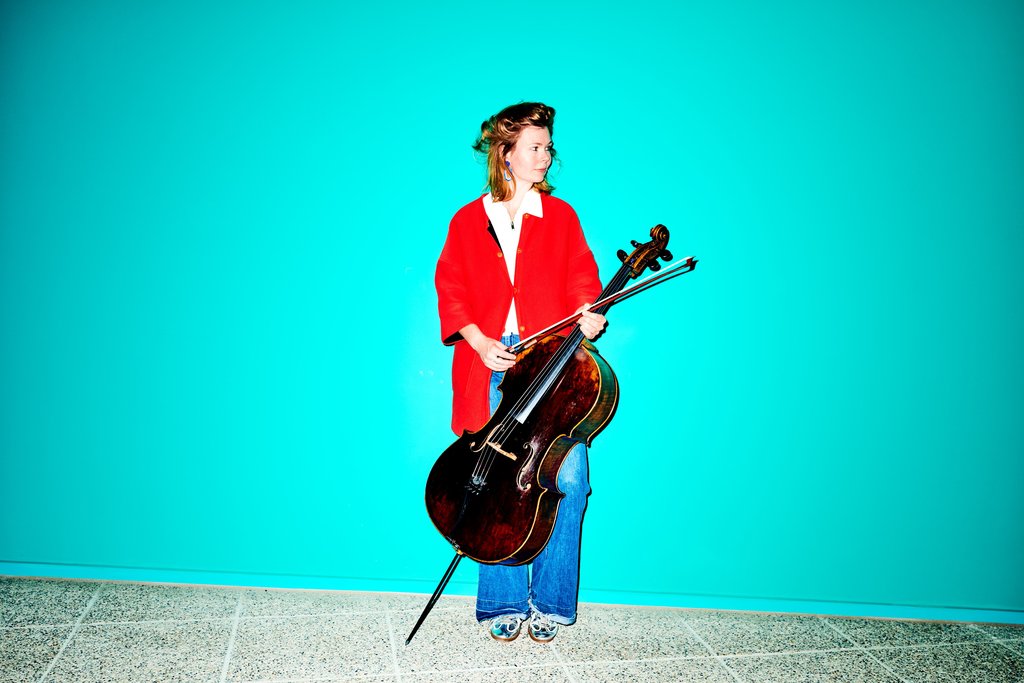
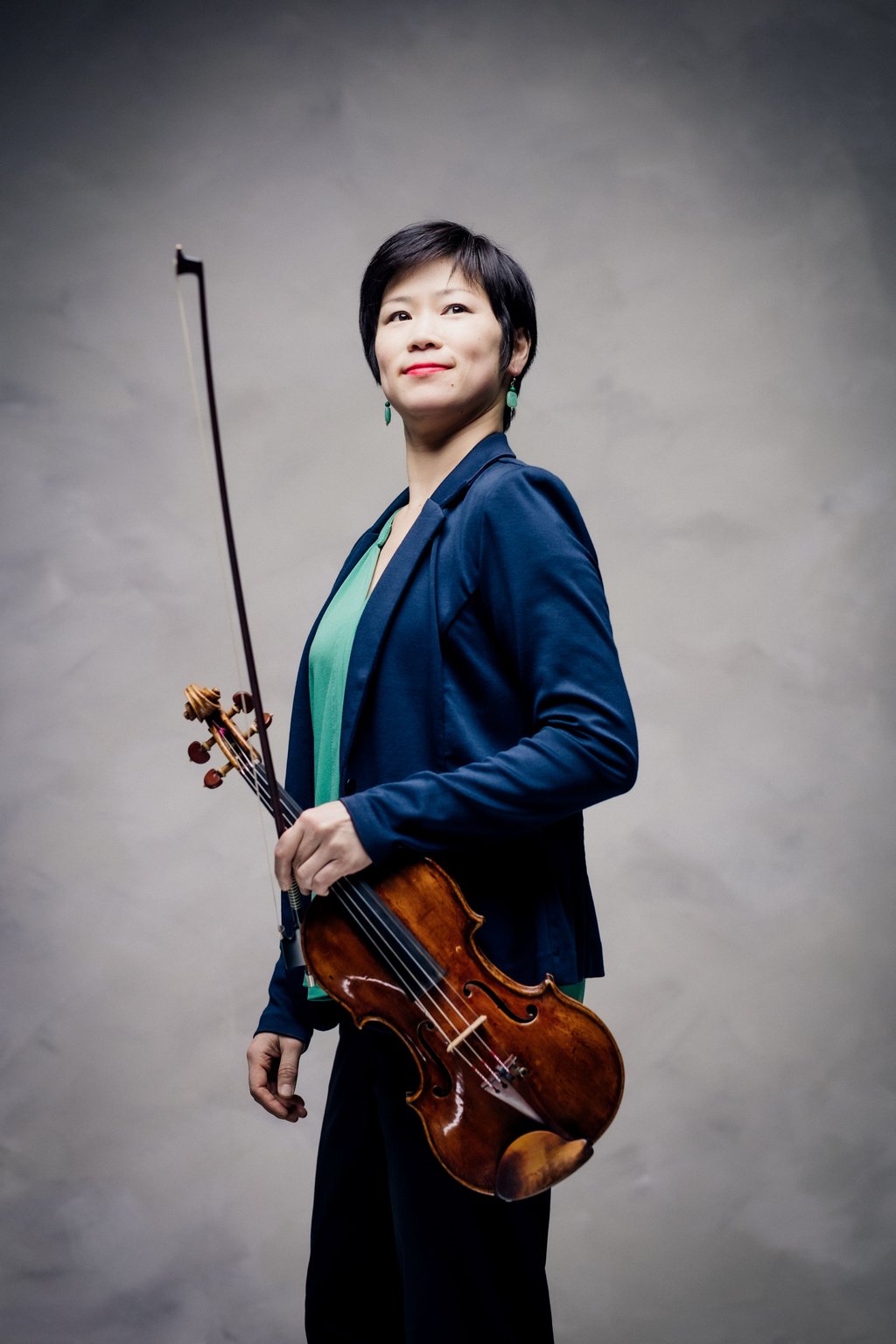
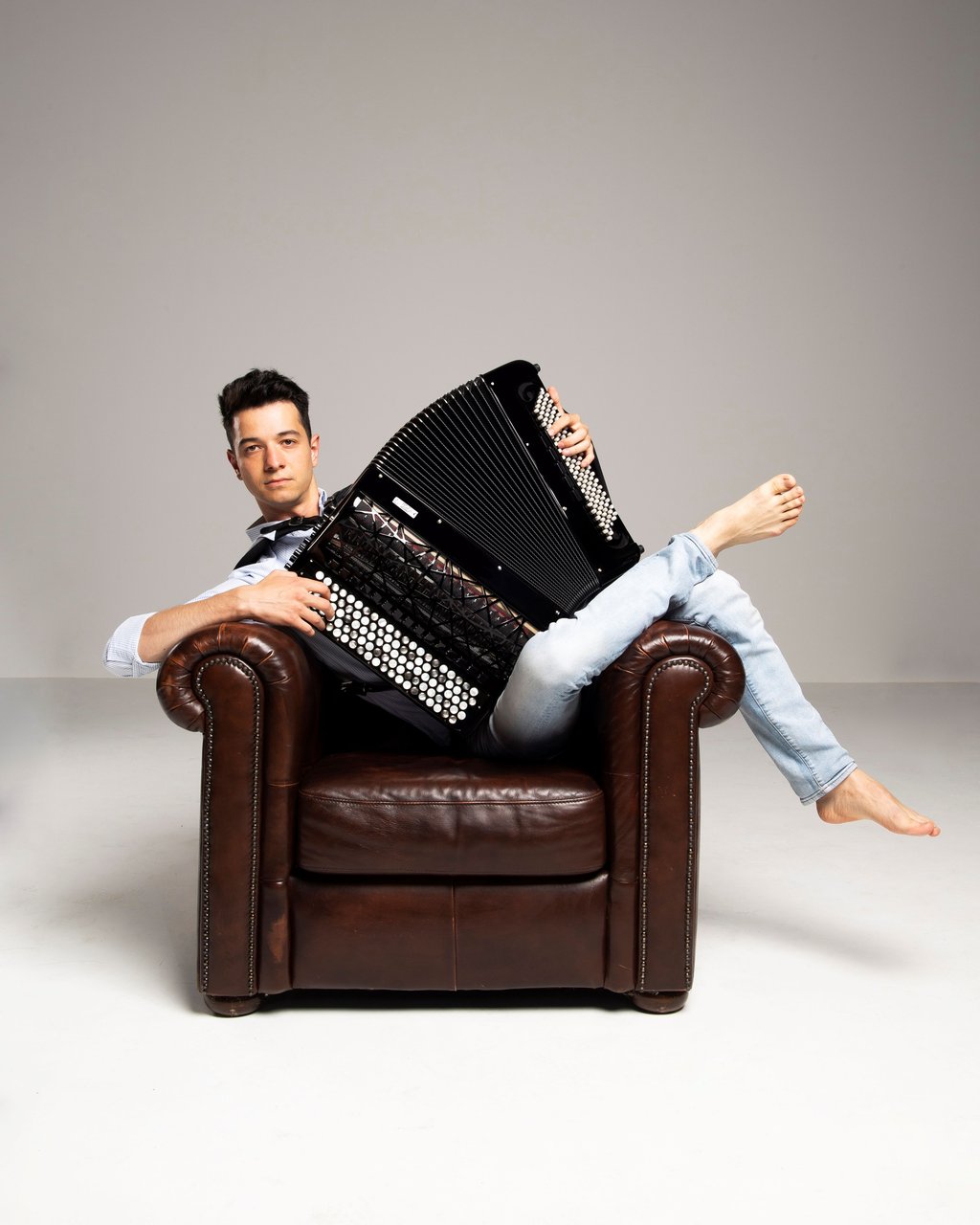
How did you artistically process or incorporate the results of your research? What music resonates with your project? Which composers are featured, and why?
The selection of musical pieces came about quite naturally. Some pieces are directly linked to my memories of my grandmother. She loved Bruch’s Violin Concerto, from which I’ve used a short excerpt. I also remember the little cassette player on which she used to listen to Lambada.
Other pieces reflect my own associations with the story. Vasks’ Pianissimo represents a silence that is anything but calm, and gives a musical voice to that silence – and, for me, to the pain. Brahms’ Gestillte Sehnsucht has always been one of my favourite songs. Its lyrics, which speak of a longing that cannot be stilled in the same way that nature settles down to rest each night, became a poignant metaphor for the grief over the loss of half my own family.
Messiaen’s Quatuor pour la fin du Temps has an obvious historical reference, as it was composed in a prisoner-of-war camp. For me, however, the sixth movement also expresses a rage and frustration that resurfaced in conversations about 7 October and the ongoing war in the Gaza Strip. It builds a bridge between history and the present.
Rihm’s Am Horizont: stille Szene – the only work originally composed for our unusual line-up – is, for me, about carrying something together despite the distance between us. It is a work of reflection.
Ultimately, the Jewish melody is linked less to my grandmother herself – who distanced herself from her Jewish identity after the war – than to her brother. He reacted in exactly the opposite way: he emigrated to Israel and, in the process of rebuilding his life, rediscovered his Jewish identity.
These are all very personal associations. I hope that listeners will draw their own meanings and emotional connections from the music.
The audience can expect not only music, but also video and audio recordings. How will you utilise and harmonise the various media? A sort of sound installation made up of radios? What role does the concert format or design play for you in general?
I knew from the outset that I wanted to use video, because the interview with my grandmother’s brother is incredibly powerful. Simply seeing him and hearing him speak creates an immediate connection.
The conversations I have recorded with members of the second and third generations run like a common thread through the entire performance. Together with the recurring motif of the radio, they have inspired me to create a kind of radio collage in which different voices, memories and perspectives overlap, blur and contradict one another.
Whilst video footage is also used for subtitles and textual information, it goes beyond that to become an artistic layer in its own right. It enables me not only to convey context, but also to bring in my own perspective as I gradually learnt more about my grandmother’s life.
Aufführungen im Festival
 , Theater im Ballsaal
Martha Bijlsma: Don’t Mention the War
Chamber Music, Dance, Performance & Music TheatreKana Sugimura, Nico Gutu
Vasks, Brahms, Bruch
- , Theater im Ballsaal
Martha Bijlsma: Don’t Mention the War
Chamber Music, Dance, Performance & Music TheatreKana Sugimura, Nico Gutu
Vasks, Brahms, Bruch